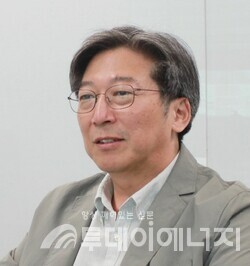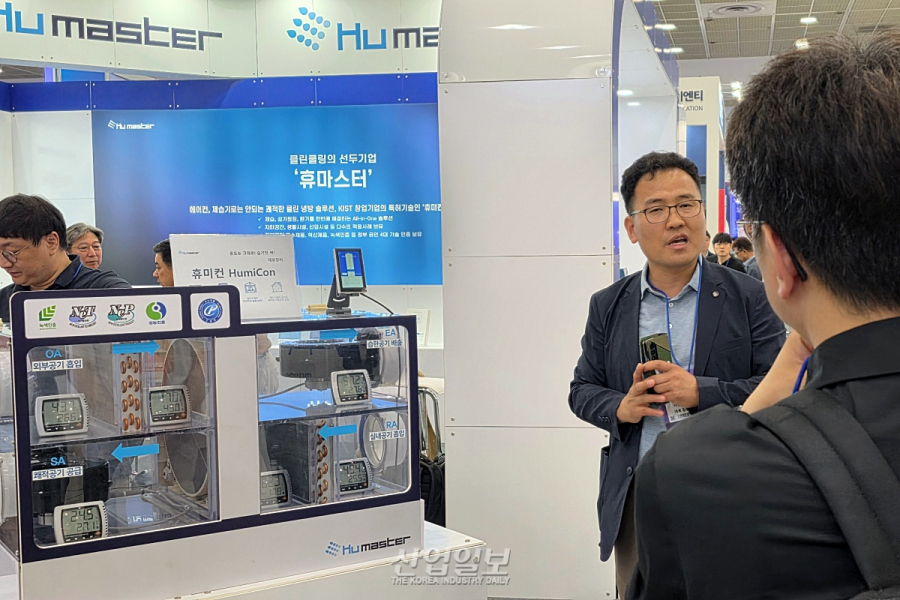
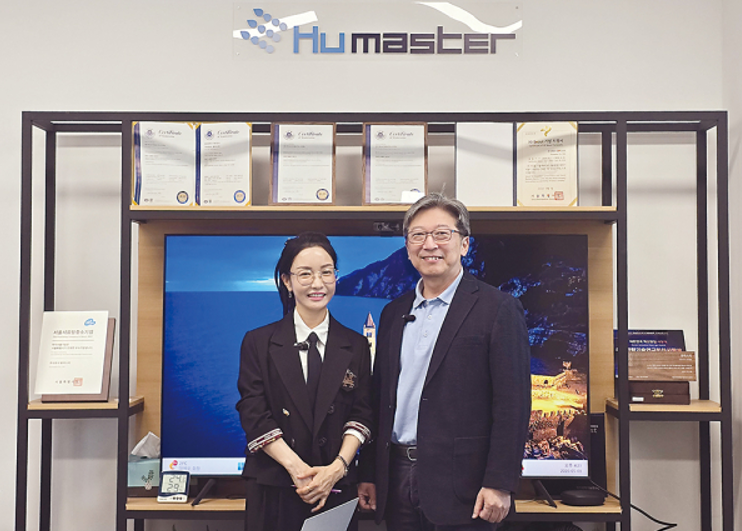
Q.Hello. I am Jang Jae-yeon, Director of the Smart Construction Confluence Association. It is a pleasure to meet you, CEO Lee. I understand that your company possesses dehumidification technology that is among the best not only in Korea but also worldwide. Could you please introduce Humaster?
Lee Dae-young: Global warming caused by energy consumption for cooling is becoming increasingly serious. I believe Humaster can contribute to breaking this vicious cycle.
Humaster was founded in 2018 as a research-based startup established by researchers from the Korea Institute of Science and Technology (KIST). The company was built on patented technology that received an award from the Korean Intellectual Property Office and new technology certified by the Ministry of Trade, Industry and Energy.
Our technology was selected as one of the “Top 10 Mechanical Technologies of the Year.” We also achieved a remarkable milestone by obtaining all four major government certifications for new technologies and products, including the Green Certification from the Ministry of Environment, NET and NEP certifications from the Ministry of Trade, Industry and Energy, and the Excellent Performance Certification from the Ministry of SMEs and Startups.
In addition, Humaster was selected as an “Baby Unicorn” company and a participant in the “Super-Gap Startup 1000+ Project” by the Ministry of SMEs and Startups.
Our products were also designated as Excellent Government Procurement Products by the Public Procurement Service, recognizing both our technological capabilities and business potential.
Q.What distinguishes Humaster’s “polymer desiccant” technology from conventional air conditioners and general dehumidifiers?
Lee Dae-young: Conventional air conditioners and dehumidifiers remove moisture by lowering the temperature to create condensation. The lower the temperature, the more condensation occurs. Therefore, to remove more moisture, the temperature must be lowered further. In other words, dehumidification is not possible without lowering the temperature.
However, lowering the temperature requires a considerable amount of energy, which means that dehumidification also consumes significant energy.
This technology also has difficulty addressing situations in which people want to remove moisture without lowering the temperature, such as during the rainy season. In such cases, overcooling can occur, causing discomfort while increasing energy consumption unnecessarily.
Humaster, on the other hand, removes moisture by filtering it through a moisture-absorbing filter, eliminating the need for energy-intensive cooling.
The moisture filter can be reused through a recycling process in which it is dried with hot air, rather than being replaced. In particular, there is an abundance of heat during summer, much of which would otherwise be wasted. By utilizing this heat, moisture can be removed without additional energy consumption.
Humaster has developed technology that regenerates the moisture filter using heat of approximately 40–50°C discharged from an air conditioner’s outdoor unit.
We also developed “Humicon,” which integrates the moisture filter with a small-capacity air conditioner. It achieves 1.4 times the efficiency of a Grade 1 energy-efficient dehumidifier.
The key to this technology is our proprietary polymer dehumidification material. It delivers more than five times the dehumidification performance of conventional materials and has a durability of over 10 years, with more than 100,000 repeated cycles.
It also provides outstanding deodorizing, antibacterial, and anti-mold functions, all of which have been verified through accredited testing.
Q.It seems that your technology could also be used in facilities where humidity control is particularly important. Who are your main customers?
Lee Dae-young: Our technology has been implemented in museum collection storage facilities. The National Palace Museum of Korea and the Joseon Records Archives Museum house important records of Korean history. Previously, these facilities faced enormous energy consumption and substantial maintenance costs due to humidity-related issues. Humaster’s technology helped resolve these problems.
Recently, we have also seen an increase in applications at art museums, exhibition halls, and private collection storage facilities.
In addition, we have been receiving many inquiries from the pharmaceutical and biotechnology industries, as well as data centers.
With the advancement of AI technology, data centers generate enormous amounts of heat, resulting in extremely high energy costs. Humaster’s technology can help reduce this energy waste.
Our technology is also increasingly being adopted in luxury homes owned by major corporate executives, as well as luxury resorts, high-end hotels, schools, and public institutions.
Q.How satisfied are customers who actually use Humicon?
Lee Dae-young: Humicon allows indoor temperature and humidity to be controlled independently.
During the rainy season or tropical nights, when the temperature is not particularly high but humidity is elevated, Humicon can create a comfortable environment simply by removing moisture. This helps address problems such as air-conditioning-related illnesses caused by excessive cooling and unexpectedly high electricity bills.
Conventional air-conditioning technology relies on cooling the air. Since the temperature must be lowered to achieve dehumidification, independent control of temperature and humidity is not possible. When the dehumidification load is high, this can cause the indoor temperature to drop excessively.
Humicon’s first installation was at a luxury residence in Pangyo. We have heard that the residents have been enjoying comfortable summers for several years using Humicon with almost no need to operate their air conditioners.
This experience eventually led to another installation at the residence of a chairman of one of Korea’s leading conglomerates.
The CEO of a construction company also installed Humicon in an underground space used as both a private office and workshop. He told us that the mold problem, which had been difficult to resolve with any other technology, was completely eliminated.
Following this experience, he signed a dealership agreement and has been actively helping expand the distribution of Humicon.
Q.In relation to the government’s roadmap for mandatory Zero Energy Building (ZEB) implementation, how can Humaster’s solutions help improve building energy efficiency?
Lee Dae-young: Thanks to their high insulation performance, ZEBs have a significantly lower need for cooling. However, due to ventilation and the accumulation of moisture generated by everyday activities, they actually have a greater need for dehumidification than conventional buildings.
Conventional air conditioners use cooling dehumidification, in which air is cooled through refrigerant coils to generate condensation.
The colder the air becomes, the more moisture can be removed. However, the indoor temperature also decreases at the same time.
In conventional buildings, after cooling dehumidification by an air conditioner, the indoor temperature rises again due to external heat loads, naturally lowering the relative humidity. In ZEBs, however, this temperature recovery effect is almost nonexistent. As a result, relative humidity may not decrease after cooling dehumidification and can even increase.
For this reason, occupants of ZEBs face two difficult situations when operating an air conditioner.
If they lower the air conditioner’s set temperature to 20°C, dehumidification is effective, but the room becomes excessively cold and uncomfortable.
Because of the enhanced insulation of ZEBs, there is no natural temperature recovery through heat loads after cooling. Consequently, the lower temperature can actually cause relative humidity to rise.
On the other hand, if they set the temperature to 25°C, the temperature feels appropriate, but the coil temperature is not low enough to achieve sufficient dehumidification. As a result, the room feels hot and sticky.
One might expect that there would be a suitable temperature somewhere between 20°C and 25°C. However, as many people have experienced during the rainy season, turning on the air conditioner makes the room too cold, while turning it off leaves the air feeling sticky and uncomfortable.
The indoor environment of a ZEB, where the temperature is appropriate but humidity remains high, is similar to these rainy-season conditions. This demonstrates the fundamental limitations of conventional cooling-centered air conditioners.
We can compare this situation to cooking doenjang-jjigae (Korean soybean paste stew). If you try to adjust its flavor using only salt, adding too little will make it bland, while adding too much will make it too salty. No matter how carefully you adjust the amount of salt, you will never achieve the proper flavor if you do not add an appropriate amount of doenjang.
The problem with ZEBs is similar. Since humidity is the main issue, air conditioners that control only temperature cannot create an appropriate indoor environment.
As a result, occupants may have to operate heaters alongside their air conditioners to compensate for excessive cooling, inevitably leading to duplicated energy consumption.
Humicon can remove moisture without overcooling and provides outstanding energy efficiency. Therefore, it can be considered an optimal cooling solution for Zero Energy Buildings.
Q.It seems that institutional and regulatory support is also necessary to facilitate the application of your technology in Zero Energy Buildings. Could you elaborate on this?
Lee Dae-young: We need to improve the technical standards used to identify air conditioners suitable for Zero Energy Buildings. In particular, the testing and evaluation standards for air conditioners need to be revised.
Under KS C 9306:2017, the technical standard for air conditioners, efficiency (coefficient of performance) is evaluated by measuring the total cooling capacity of an air conditioner and its power consumption under those operating conditions.
This standard focuses on the quantitative aspect—the magnitude of total cooling capacity—without distinguishing between the qualitative characteristics of the cooling output, namely sensible heat and latent heat.
Consequently, technological development under the existing standards has primarily focused on maximizing total cooling capacity at the same level of power consumption, without sufficient consideration of sensible heat and latent heat.
In Zero Energy Buildings, if the SHR (Sensible Heat Ratio) supplied by an air conditioner differs significantly from the SHR of the building’s cooling load, the indoor temperature may become excessively low or indoor humidity may become too high. Additional heating or dehumidification may then be required to maintain a comfortable indoor environment.
In other words, an air conditioner alone may not be sufficient, resulting in additional energy consumption.
Therefore, even if an air conditioner demonstrates high efficiency under current technical evaluation standards, this does not guarantee a reduction in cooling energy consumption if it cannot meet the SHR requirements of the building’s cooling load.
To reduce cooling energy consumption in Zero Energy Buildings, it is necessary to minimize energy use under operating conditions that satisfy the SHR requirements of their cooling loads.
To achieve this, two or three representative SHR conditions for Zero Energy Building cooling loads should be selected. Technical standards should then be established to measure an air conditioner’s cooling capacity and power consumption under conditions in which its cooling output meets those SHR requirements, and to calculate its performance coefficient accordingly.
Q.After a long period of research and development, Humaster has recently returned to profitability and entered a period of full-scale growth. What do you think has led the market to begin recognizing Humaster’s technology?
Lee Dae-young: Since our product was entirely new and had no comparable products in either domestic or international markets, there was little understanding of it in the market.
In the early stages of our business, all manufacturing was outsourced and production volumes were small, resulting in very high manufacturing costs. Combined with the high product price and limited understanding of the new technology, this made market development extremely challenging.
In response, Humaster refined its strategy to focus more on dehumidification solutions.
Initially, we targeted underground spaces and collection storage facilities. As our technological capabilities gradually gained recognition, applications expanded into the pharmaceutical, biotechnology, and semiconductor industries.
Although we faced many challenges along the way, we actively addressed them with a strong sense of responsibility. I believe this helped us earn our customers’ trust and gain recognition for our technology.
I believe Humaster’s growth has been driven by our efforts and challenges in developing the industrial market.
Q.Beyond the industrial and commercial markets that Humaster currently focuses on, does the company have plans to expand into the general residential market or introduce any new product lines?
Lee Dae-young: Although the number of Humicon installations in luxury homes has been increasing, its relatively high price has limited its expansion into the general residential market.
Furthermore, Humicon serves as a supplementary system to conventional air conditioners, meaning that an air conditioner must also be installed.
Humaster is currently preparing to develop a more compact and accessible product based on its desiccant dehumidification technology, with the aim of entering the general residential market.
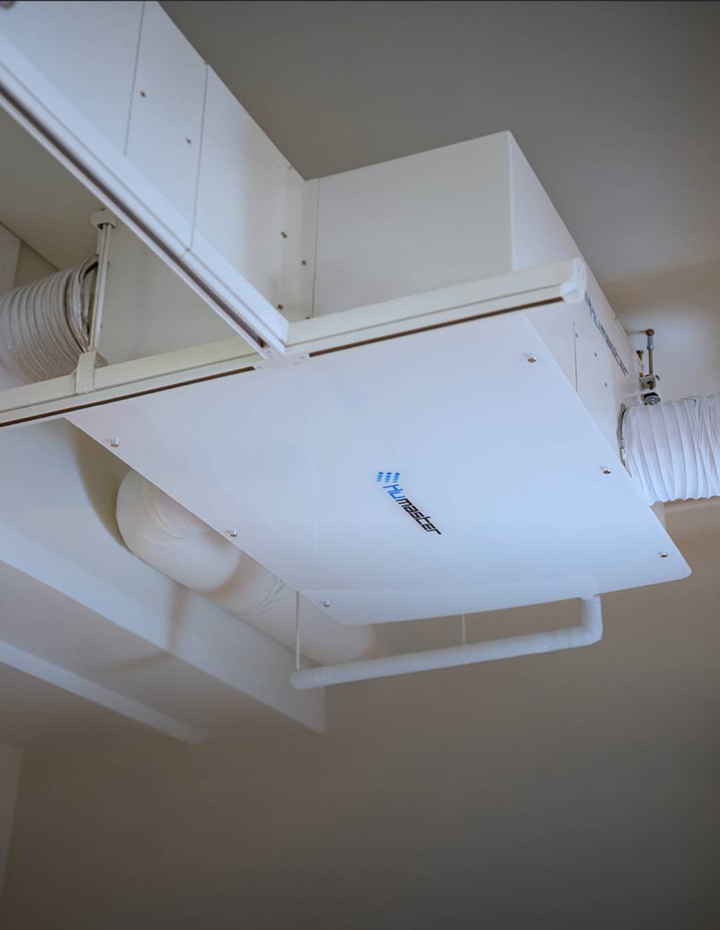
One such product under development is a dehumidifier designed specifically for dressing rooms.
Dressing rooms are among the areas in apartments where defects caused by mold occur most frequently. Humaster’s dressing-room dehumidifier is designed to be built into the ceiling to prevent mold growth. It can also provide air purification and ventilation.
This is a dehumidifier designed for localized spaces. It removes moisture using a moisture filter and regenerates the filter with an electric heater.
There are already several ceiling-mounted general-purpose dehumidifiers on the market, including products from major manufacturers. However, we understand that construction companies have been hesitant to adopt these products due to drainage issues caused by the dehumidification process.
Humaster’s product is the only dehumidifier without a drainage requirement. We plan to introduce it to the market soon through joint development projects with major construction companies. We believe it will address the issues that construction companies have been concerned about.
In addition, Humaster is developing “Humicon+,” which incorporates a cooling function.
Humicon+ is designed not only to fully replace conventional air conditioners but also to control temperature and humidity independently. Naturally, it will also deliver outstanding energy efficiency.
Q.What does Humaster envision as “the buildings of the future”?
Lee Dae-young: I believe that buildings should not simply be spaces containing separate household appliances. Instead, the buildings themselves should become smart buildings through building-embedded systems.
Buildings should do more than protect people from wind and rain and provide a safe shelter. They should also create comfortable living environments with the highest possible energy efficiency.
At Humaster, we aim to contribute to smart building development by creating “built-in, high-efficiency integrated air-conditioning systems” that combine the essential functions required for indoor air quality: ventilation, air purification, dehumidification, humidification, cooling, and heating.
Q.Could you tell us about Humaster’s future goals and vision?
Lee Dae-young: Humaster is committed to providing optimal residential and industrial environments with outstanding energy performance, based on world-class desiccant materials and engineering technology.
Through Humidity Conditioning, we are working to complement and replace conventional Air Conditioning technology, which is based on Air Cooling.
Our goal is to become the world’s leading company in humidity conditioning technology, pioneering the future of air-conditioning technology while providing both optimal environments and reduced energy consumption.
I would like to express my gratitude to Jang Jae-yeon, Director of the Smart Construction Confluence Association, for conducting this interview, as well as to Korea Construction News.
Q.Once again, we would like to thank Humaster CEO Lee Dae-young for taking the time to speak with us today. We wish Humaster continued growth and success as a leading representative of K-Smart Technology, expanding beyond Korea into the global market. We would also like to extend our thanks to Korea Construction News.
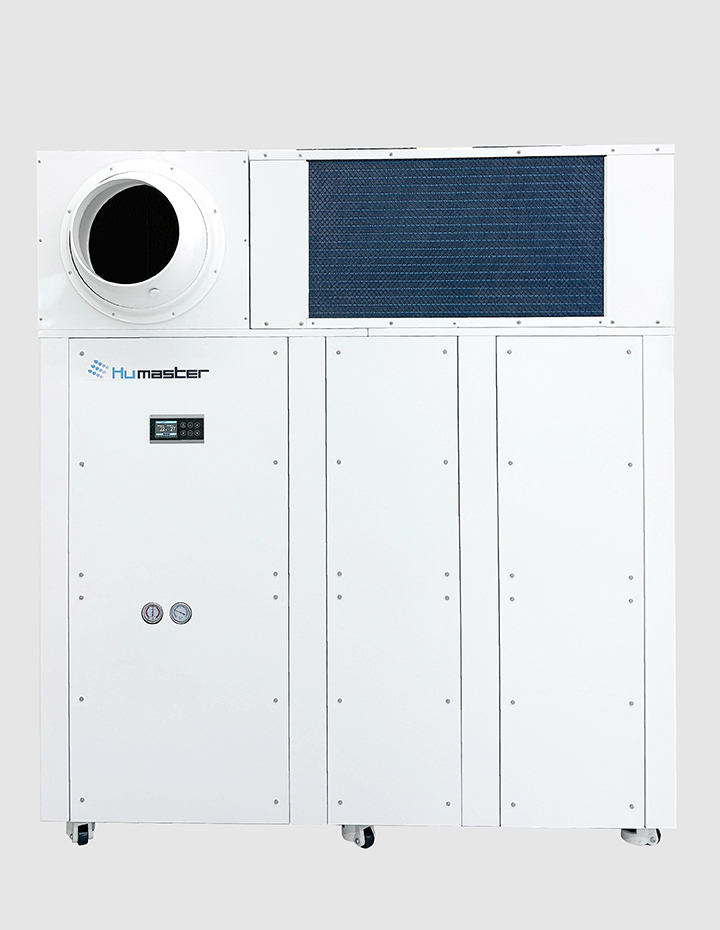
Same temperature, no humidity. Humicon features desiccant technology that helps maintain optimal humidity at 40%. It also includes air purification and ventilation functions, ensuring fresh and clean indoor air.
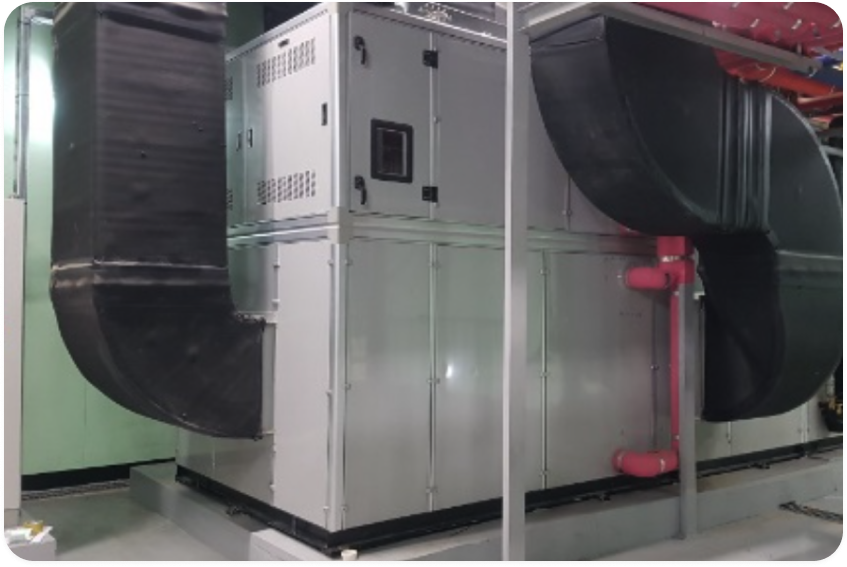
Huzero is an industrial dehumidifier designed for low-temperature and extremely low-humidity environments to improve factory productivity, offering energy efficiency 60% higher than existing market products.
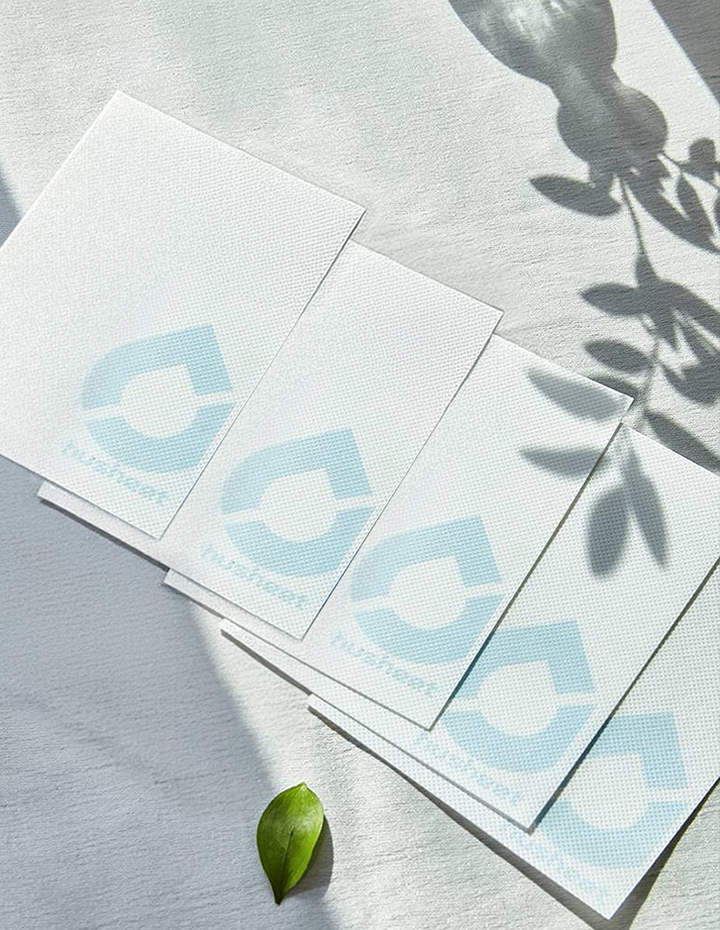
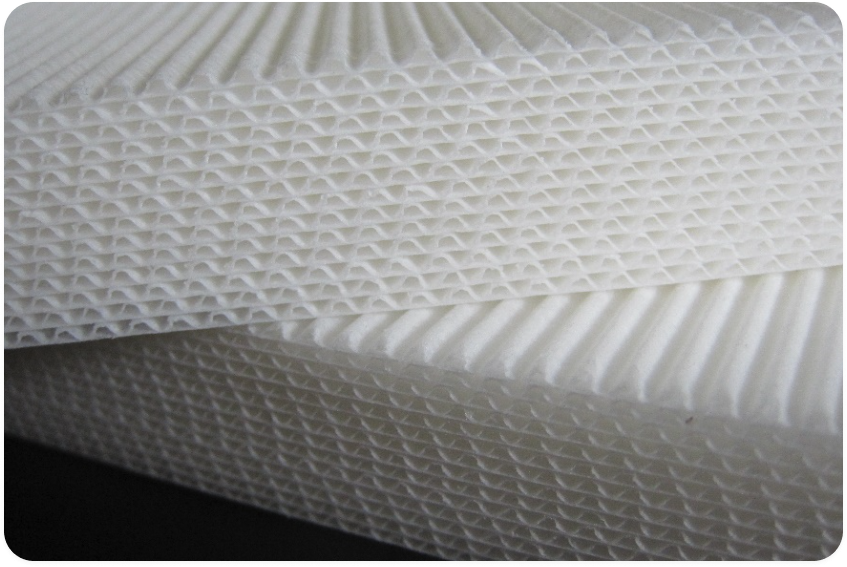
Husheet is an innovative and patented technology, ultra-slim dehumidifier that can control humidity as well as deodorizing. It also has dehumidifying, deodorizing, antibacterial, and anti-fungal functions.
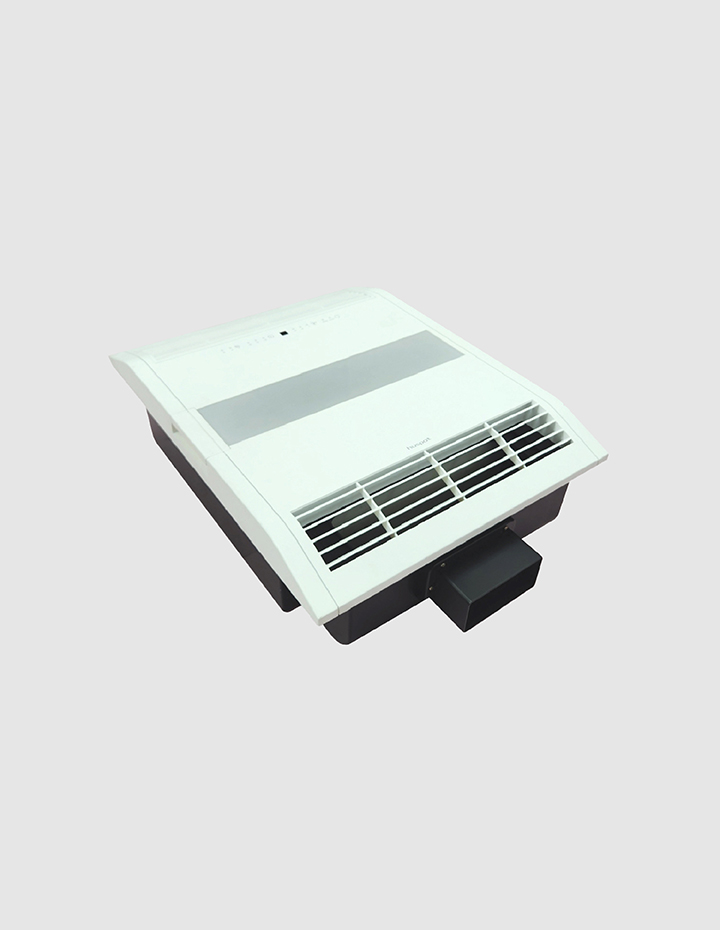
Protect your valuable clothes and belongings from humidity with Huspot, a desiccant dehumidifier designed specifically for dressing rooms in your home. Huspot effectively removes moisture from bathrooms and other areas using advanced desiccant technology, and safely release the humidity outside. Therefore, it is not neccessary to empty a water tank, install pipes, or worry about water leaks. Huspot can be installed on the ceiling, allowing you to maximize the use of your dressing room space while maintaining an optimal humidity level for your clothes and accessories. Keep your dressing room fresh and humidity-free with Huspot.